


Table of Contents
A guest post from GeoComply, part of the EZDRM Revenue Security Prism series
The media industry’s licensing model is built around an assumption: that you know where your users really are. Every rights deal, regional exclusivity window and tiered pricing strategy depends on it. While DRM security protects content based on individual entitlement, layering precise location intelligence takes it a step further. It is important to understand whether the person watching the content is where they claim to be, or if they are using sophisticated location, device and network spoofing tools to appear elsewhere. This guest blog by our partner GeoComply, as part of our Revenue Security Prism series, shows how geofencing and VPN detection protect content rights, revenue, and media relationships.
The gap between where a user claims to be, and where they actually are, costs the industry billions in annual revenue. Closing it requires layering two critical components into any revenue security stack: precise geofencing to enforce digital geographic boundaries, and robust, context-aware VPN detection to reinforce digital boundaries without impacting honest users.
The real cost of location uncertainty
Most platforms can’t even detect the threats they’re facing, letting high-risk activities like piracy, password sharing or price arbitrage slip through the cracks. An independent study conducted by Kingsmead Security Ltd. revealed that 84% of unique IP addresses aimed at two OTT vendors came from residential IPs that looked identical to legitimate home broadband connections.
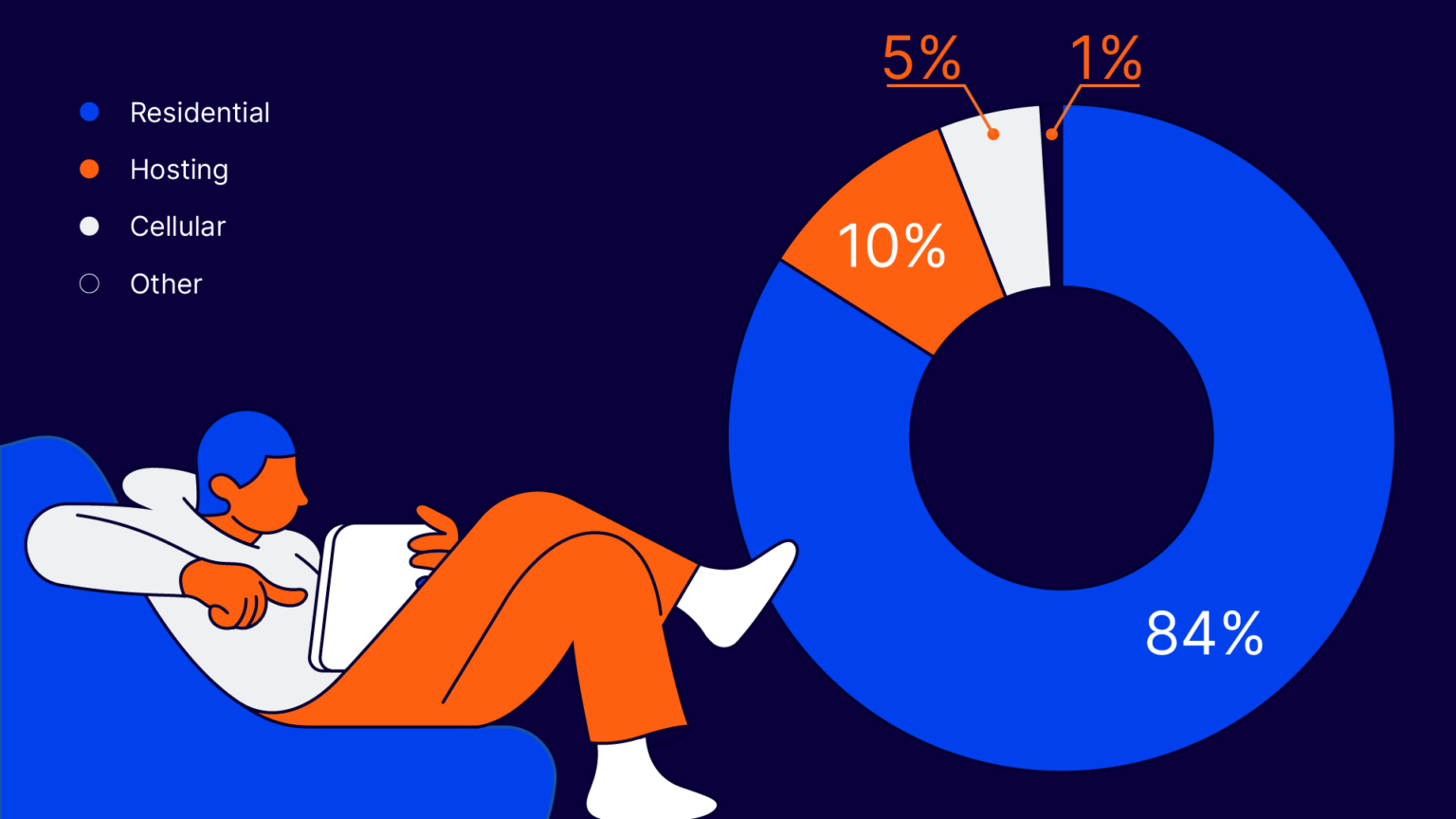
Standard IP blocklists, the default tool in most existing security stacks, are often completely blind to these nuances. This means that many current solutions lack the ability to detect sophisticated threats, and worse, are falsely reporting them as normal activity.
The sheer scale of these threats is undeniable. Sports rights holders alone miss out on $28.3 billion in recoverable revenue annually due to piracy. Password sharing compounds the problem further, costing streaming platforms approximately $12.5 billion in revenue every year. And for platforms with global subscriber bases, regional pricing arbitrage adds yet another leak. In 2024, the gap between a US subscription (~$15.49) and the equivalent Turkish rate (~$3.50) resulted in users routinely spoofing their location just to lock in the cheaper regional price.
While each of these examples illustrates a distinct attack vector, they share a common blind spot: platforms not knowing where their users actually are. Beyond revenue, every pirate stream and fraudulent account consumes bandwidth and compute capacity that legitimate, paying subscribers should be benefiting from.
There are also strategic and reputational costs. Rights holders are increasingly active in monitoring how their content is distributed. The Italian and Spanish football leagues have publicly attributed the declining value of their domestic rights packages to piracy leakage. When your platform’s “exclusive” rights aren’t exclusive in practice, that changes the conversation with every content partner.
Studios and leagues don’t just want distribution partners; they want safe harbors for their most valuable content. A platform that can’t demonstrate rigorous rights enforcement gets passed over for the next exclusive deal or league renewal. In a market where premium content is a primary differentiator, this risk can make or break any platform’s bottom line.
The financial effects also trickle downstream to the very subscribers platforms are trying to retain. Infrastructure drained by pirate streams drives up operating costs. Revenue lost to arbitrage and account sharing has to be recovered somewhere. The result is price increases, reduced content investment and a degraded experience for paying fans who never broke the rules. It’s a tax on your most loyal customers.
Closing the blind spot: How Geofencing and VPN detection work together
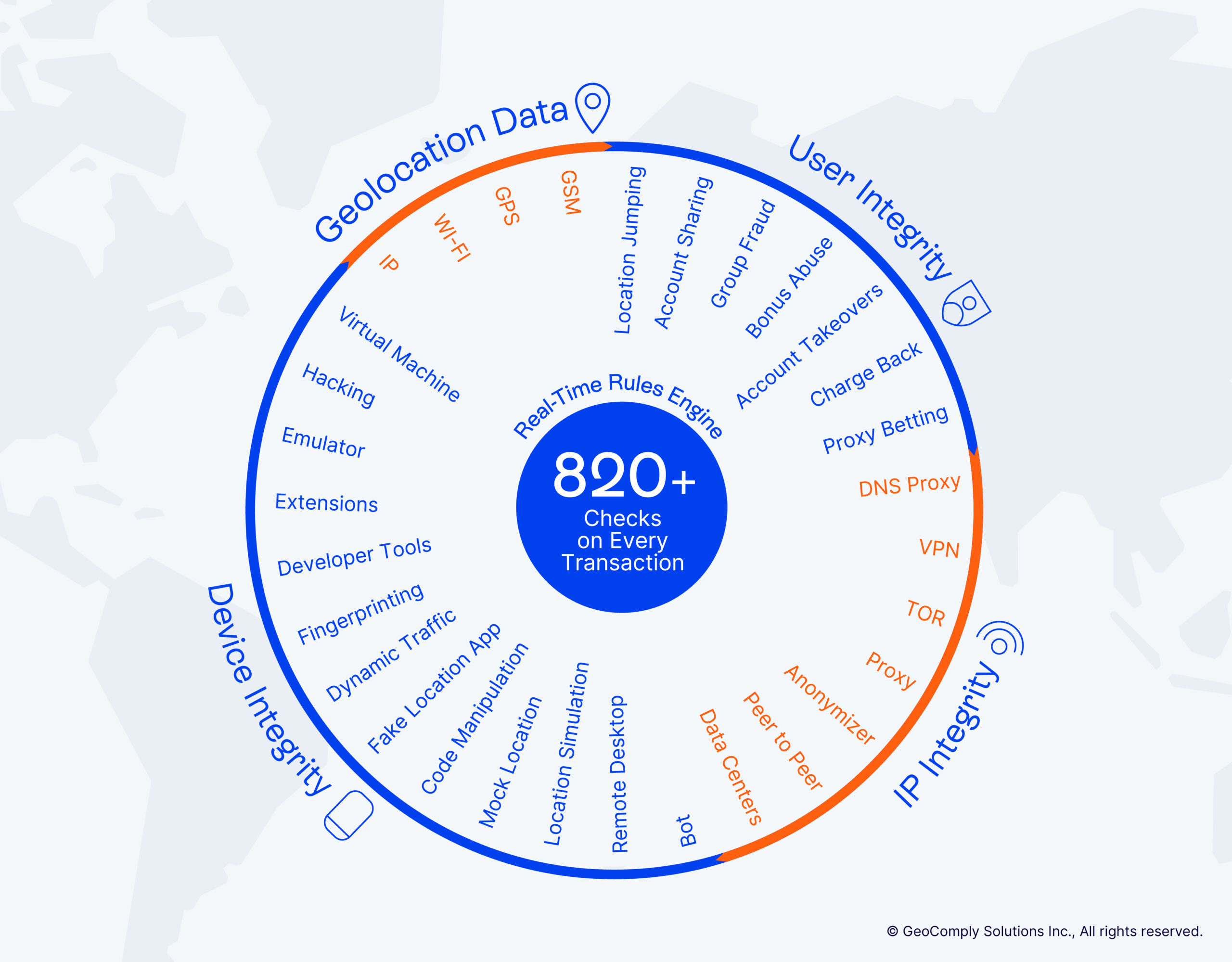
True precise geofencing and VPN detection starts with signals that know—not infer—where a user is located. Rather than relying on outdated IP addresses that can be inaccurate by over 50 miles, next-generation location intelligence triangulates device integrity and behavioural signals with more precise location signals like GPS, WiFi and cell tower data, to sharpen accuracy down to a few feet.
Whenever a user accesses content, the system knows with confidence whether they are genuinely inside a licensed territory—not where their IP address suggests they might be. That is the difference between meeting the requirements to tick a box versus effectively protecting content to uphold regional exclusivity. Platforms using this approach can prevent licensing violations and also enforce various regional, pricing and venue-specific models.
However, a precise boundary is only as strong as the ability to prevent it from being bypassed. This is where context-aware VPN and proxy detection is critical, and where the gap between legacy tools and modern intelligence is most stark. Standard blocklists target known VPN data center IPs. Modern piracy instead routes through residential proxies, mobile networks, and sophisticated spoofing tools specifically engineered to look like legitimate traffic.
Catching it requires VPN and proxy detection that goes beyond standard IP databases. Granular, regularly updated technologies that can detect threats like residential proxies and anonymous IPs can significantly enhance performance. Independently tested against real-world spoofing scenarios by Kingsmead Security, GeoComply’s VPN detection solution set a new industry benchmark, achieving a 99.1% VPN detection rate.
Detection without precision isn’t protection. It’s a growth detractor. Any traveling subscribers flagged as suspicious, privacy-conscious users blocked for running a VPN for security purposes or legitimate fans locked out of a live match are churn events.
The key is context: building a holistic picture of how subscribers typically behave over time, what devices they use, where they normally watch from and how their patterns evolve.
True location intelligence knows the difference, stepping up only when risk signals emerge, and running in the background for everyone else. This was reinforced by the same third party tested vendor above, achieving a 0% false positive rate when deploying precise location.
The result is a content security layer that serves two traditionally competing goals: Mitigating threats, while preserving the seamless experience that delights legitimate subscribers.
Precise location as a revenue driver
Closing content security blind spots doesn’t just stop revenue from bleeding. It opens the door to growth opportunities. When platforms can precisely verify where their users are and what their intent is, protection and growth stop being competing priorities.
Protecting your most valuable relationships: Access to Tier 1 content, premium sports, studio releases and live content is contingent on demonstrating that you can enforce the rights. Platforms that provide irrefutable evidence of compliance become preferred partners for future exclusive deals. In a market where premium content is the primary differentiator, the ability to prove you can protect it isn’t a checkbox: it’s a competitive advantage.
Converting leakage into revenue: Piracy, password sharing and price arbitrage represent value to be captured. Users want your content; just not in the way your business model requires. When access loopholes are effectively closed, many gray-market users convert to legitimate subscriptions. The Netflix example is telling: after implementing location-based controls on password sharing, they added 9.3 million new subscribers in a single quarter.
Making your advertising more valuable: Advertisers pay premium CPMs for verified audiences in verified locations. When your inventory is backed by precise, validated geolocation data, and guaranteed free of bots or unqualified audiences, you can command higher rates. Around 65% of location-based ad spend is currently wasted on inaccurate, misdirected advertising. Partners that solve this problem for advertisers unlock a significant premium.
Building trust with frictionless security: The downfall to catching bad actors is that good users never notice any of it happening unless it hurts their experience. Frictionless security that operates invisibly in the background is a retention driver. When subscribers feel safe and they never hit a false positive roadblock, they don’t churn in frustration.
Keeping legitimate subscribers loyal: Context and location-driven insights allow platforms to surface the right content, at the right moment, for the right person, turning each session into a personalized experience. For example, fans walking through a venue threshold can be greeted with exclusive pre-event content. Or a subscriber in a specific city can be served locally relevant programming, news or neighborhood-level advertising.
Looking to the future: Essential layers in the revenue security prism
The best revenue security solutions are not single products but a set of complementary layers, each addressing a distinct attack vector. DRM ensures content can’t be decoded without the right license. Session tokenization ties playback to a specific authenticated session. Watermarking provides accountability if content leaks. Geofencing and VPN detection ensure the license is only ever issued to a user who is genuinely where they claim to be and that no spoofing tool can change that answer.
Together, each layer closes the loop that individual tools leave open. For a platform whose business model depends on knowing where viewers are, that closed loop isn’t just a security feature. It’s a foundation for unlocking future revenue opportunities.
About GeoComply
GeoComply’s digital identity platform is purpose-built to protect the streaming ecosystem, from high-value content protection to subscriber growth. Its location-based trust engine fuses high-integrity location intelligence, device DNA, and behavioural data to enforce territorial licensing and satisfy the industry’s strictest studio mandates. By detecting sophisticated VPNs, proxies, and GPS spoofers that other platforms miss, GeoComply ensures premium content remains secure without disrupting legitimate users. GeoComply’s world-class geolocation precision also allows it to provide advertisers with the “Gold Standard” of location data required to eliminate ad-fraud and ensure accurate geo targeting. GeoComply’s models leverage 14+ years of expertise to solve the modern streaming era’s toughest challenges, including unauthorized password sharing and account takeovers. By innovating where speed meets precision, GeoComply protects revenue and rights without compromising the digital experience, keeping media platforms ahead of emerging threats while ensuring a frictionless user experience.
About EZDRM
EZDRM delivers a fully integrated suite of security solutions that protect and maximize revenue for streaming services. Its core DRM-as-a-Service (DRMaaS) offering is complemented by C2PA-based tools that manage and scale content provenance assertions for video. With deep industry-standard support and broad workflow integrations, EZDRM provides the most reliable path to an enhanced viewer experience. Whether live, on-demand, downloadable, or offline, EZDRM ensures secure delivery across the widest range of consumer devices. Standards-driven encryption, precision key management, and robust metadata safeguard access, block ad substitution, and prevent content tampering. Seamless integration with video player technology enables secure, low-latency playback, expanding business opportunities. With its straightforward, cost-effective model, EZDRM continues to set the benchmark for end-to-end video content security.

About James Clark, GM Media & Entertainment
Leading GeoComply’s Media and Entertainment division, James helps organizations use location to secure their services, reduce fraud, and protect their users. He has been involved with the ever-evolving challenge of secure media delivery throughout his career in the digital entertainment sector. James combines a technical understanding of security technologies with extensive experience working closely with businesses to fight piracy and fraud.